NATIONAL HARBOR, Maryland ― The Corps is planning for a future fight that sees small units of Marines dispersed over a large area.
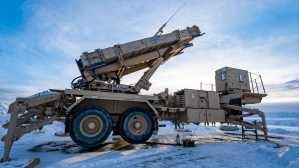
Marines will be armed to the teeth with sensors and potentially missiles capable of sinking enemy ships. That’s the vision of Marine Corps Commandant Gen. David Berger that was formulated specifically to faceoff against China in the Pacific Ocean, but Marine leaders say can it be used in any other potential theater of war.
While the Corps is still fine-tuning certain aspects of dispersed operations, like training and equipment, one major questions remains.
How will the Marine Corps provide logistical support to dispersed Marines in a hostile environment?
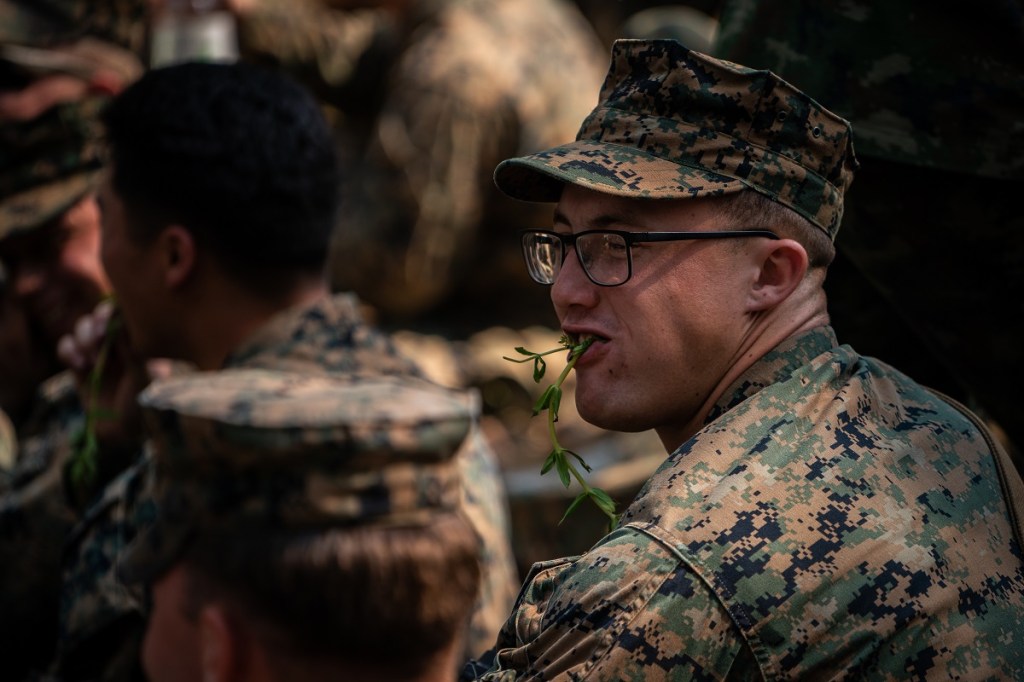
Marine Lt. Gen. Eric Smith the current commander of the Marine Corps Combat Development Command and the deputy commandant for combat development and integration has one possible solution: Foraging.
“The first thing about being able to handle a logistics enterprise support you in a distributed environment is need less,” Smith said Tuesday at the 2021 Sea-Air-Space conference.
“Why would I move water to the South China Sea? That’s insane, why would I move food? It’s called expeditionary foraging,” he added.
In the future Marines may be tasked with getting their own food, processing their own water and potentially even buying replacement parts for their equipment while dispersed on small far-flung expeditionary advanced bases, the general said.
In December 2019, Marines with the 31st Marine Expeditionary Unit put some of those foraging concepts to the test while training on the island of Tinian, Northern Mariana Islands.
During the exercise Marines with Combat Logistics Battalion 31, were tasked with maintaining logistical support of the MEU using “21st century foraging,” Marine Corps Times previously reported.
Smith believes future Marines will deploy with small water purifiers, which can be carried by a single Marine, and wearable power generators.
“The only thing I wish to move is lethality,” Smith said.
“Fuel, additives you don’t have to bring everything.”