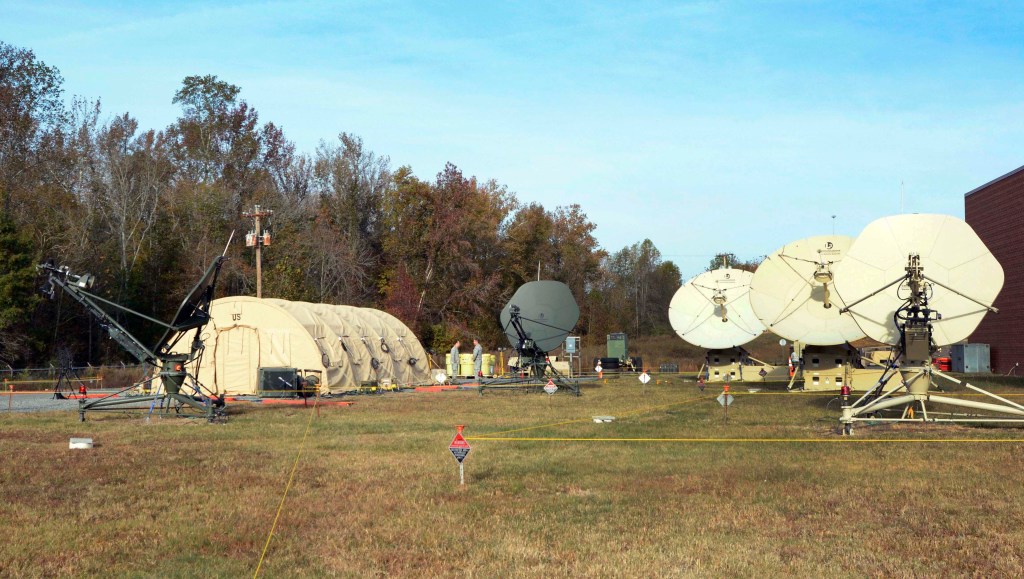
The Army is going to be piloting a quick communications support element with the potential to “fundamentally change the structure” of expeditionary signal battalions.
Speaking at TechNet Augusta, Maj. Gen. John Morrison, commander of Fort Gordon and the Cyber Center of Excellence, said the Army, at the direction of the chief of staff, is looking to execute a pilot this fall to see what a Joint Communications Support Element would look like in the Army.
The JCSE “provides rapidly deployable, scalable, en route and early-entry communications capabilities across the full spectrum of operations in order to quickly enable the joint force” and “can globally deploy within hours of notification with communications packages tailored to the specific needs of a full joint task force headquarters and joint special operations task force.”
Morrison said the pilot will be conducted in September in concert with Forces Command.
He noted that the Army, in preparation, has received a lot of support from JCSE given that the Army wants to use its soldiers as opposed to the joint element.
They want to make sure if they put the proper kit in the hands of soldiers with the right training, they’ll be capable of doing scalable communications, Morrison said.
He added that if it’s as successful as some have indicated, “I think it could fundamentally change the structure of our expeditionary signal battalion.”
From the JSCE perspective, specific capabilities include deploying in hours, early entry for a 40-seat joint command-and-control node, commercial-air transportable, access to DoD and commercial networks and 24/7 reach-back capability.